ARTICLE · ORGANIZATION DESIGN IN THE AI ERA
WorkSystem Engineering™:
the new executive imperative
People, technology, structure and process are still being addressed as separate problems. WorkSystem Engineering™ is the discipline of designing them as one system.
Thrivin · WorkSystem Intelligence™ · August 2026 · 3 min read
Senior executives and organization development leaders face a common challenge: the operating environment is changing faster than most organizations can adapt. AI is reshaping tasks, skills are becoming obsolete at an ever-accelerating rate, global talent models are expanding, and pressure for productivity continues to rise. Yet many transformation efforts still address people, technology, structure, and process as separate problems.
That fragmentation is increasingly costly. It is also setting the stage for a critical new executive imperative: WorkSystem Engineering™.
SECTION 01
What is WorkSystem Engineering™?
A WorkSystem™ is the complete environment through which an organization produces results. It includes people, roles, skills, workflows, technology, AI, automation, decision rights, organizational structures, incentives, and external talent.
WorkSystem Engineering™ is the disciplined practice of designing and continuously improving these interconnected elements as one integrated system. It begins with the business outcomes the organization must deliver and works backward to determine how work should be performed—and by what combination of human and digital capabilities.
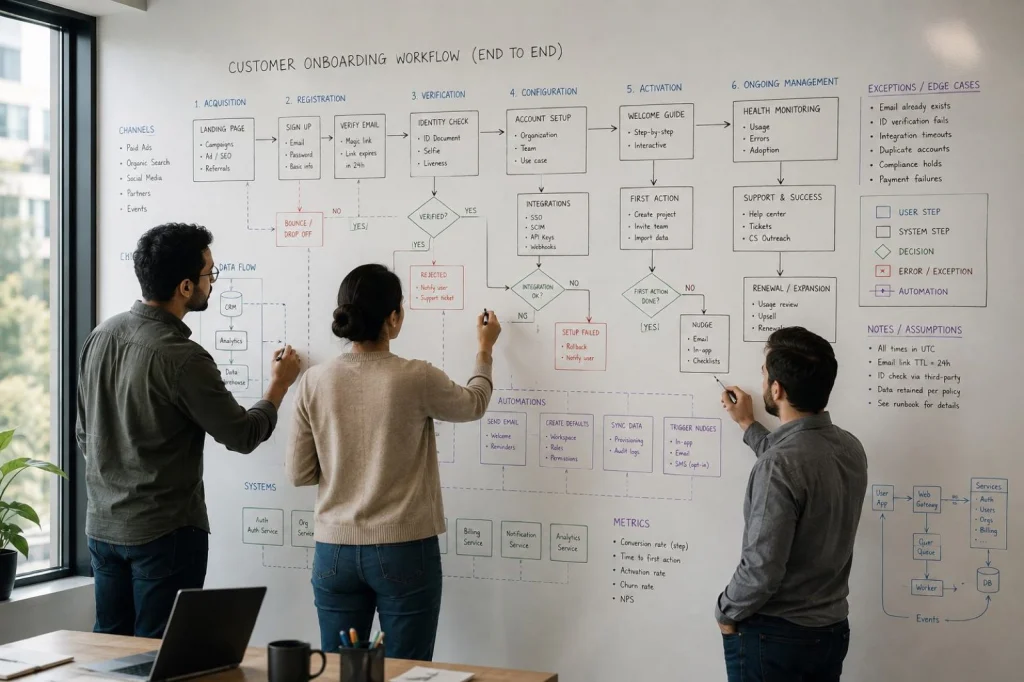
The concept parallels software systems engineering. No organization would engineer sophisticated software one component at a time—independently designing the presentation layer, business logic, database, APIs, and user experience—and expect the pieces to work seamlessly. Yet organizations routinely invest in individual dimensions of work without engineering how they operate together.
WorkSystem Engineering™ applies the same systems discipline executives already trust.
EXHIBIT 1 — THE SAME DISCIPLINE, APPLIED TO WORK
| Traditional software systems engineering | WorkSystem Engineering™ |
|---|---|
| Define business requirements | Define business outcomes and strategic objectives |
| Analyze the current system | Assess how work gets done today |
| Design and specify the system architecture | Design the future-state WorkSystem™ |
| Select technologies and components | Determine the optimal mix of human, digital, and global capabilities |
| Build code and integrate components | Implement people, AI, global talent, automation, and workflows |
| Test and validate to specification | Measure business performance and operational effectiveness |
| Deploy new code and components | Execute the new WorkSystem™ |
| Monitor performance and user feedback | Continuously measure WorkSystem™ performance |
| Optimize, iterate, and upgrade | Continuously optimize the WorkSystem™ |
Source: Thrivin
SECTION 02
Why it matters now
Organizations cannot realize the value of AI by inserting new tools into outdated workflows. Nor can they solve changing capability needs through hiring, restructuring, or training alone. Each intervention affects the others.
Automating a task may change a role. A changed role requires different skills. New skills affect hiring and development priorities. These shifts may alter decision rights, management capacity, team structures, and measures of performance. Treating any one element in isolation can simply move friction elsewhere in the organization.
EXHIBIT 2 — ONE CHANGE NEVER STAYS IN ONE PLACE
A task is automated
The role changes
The role requires different skills
Hiring and development priorities shift
Decision rights, management capacity, team structures, and measures of performance change
Source: Thrivin

WorkSystem Engineering™ gives executives and OD leaders a shared framework for navigating these dependencies. It connects strategy with organization design and turns workforce transformation into an operating discipline rather than a series of disconnected initiatives.
This approach also changes the questions leaders ask. Instead of beginning with “Where can we deploy AI?” or “How many people do we need?”, leaders can ask:
SIX QUESTIONS TO ASK INSTEAD
What outcomes must this system produce?
What work is essential to those outcomes?
How should that work be redesigned?
Which contributions are best made by employees, global talent, automation, or AI?
What capabilities, structures, and management practices will make the system effective?
How will we measure and continually improve performance?
The competitive advantage ahead will not come from technology or talent alone. It will come from the organization’s ability to engineer both—together—around the work that creates value.